How a Commercial Repair Call Actually Unfolds
The phone call is where severity gets sorted. Our dispatcher will ask about active dripping, what is underneath the leak, whether the roof is single ply, modified bitumen, metal, or built up, and how old the system is if you know. That conversation decides whether we send a crew with tarping materials and a wet vacuum first, or whether we can schedule an inspection in the next day or two. For active leaks, the priority is dry in: stopping water intrusion with temporary measures so the interior stops absorbing damage while we plan the permanent fix. A square of self adhered membrane over a torn seam can buy a week of dry weather, and that week is sometimes the difference between a two thousand dollar repair and a fifteen thousand dollar interior restoration.
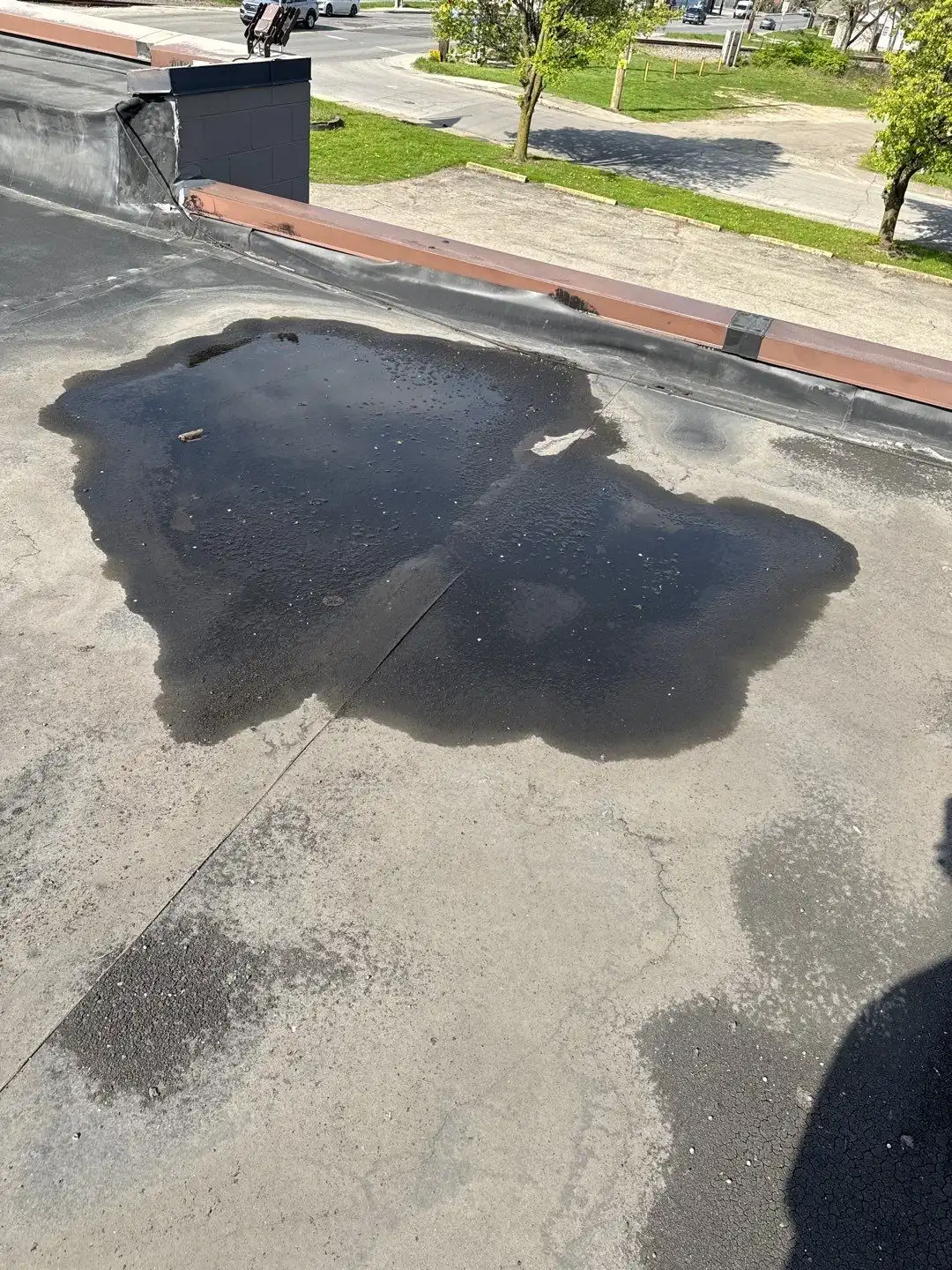
Once on site, the crew walks the roof methodically. We are not just looking at the obvious wet spot from inside. Water travels laterally on flat roofs, sometimes twenty or thirty feet from the actual breach, and the source is often a failed pitch pan, a split at a parapet termination, a backed up drain, or a fastener that has worked loose under thermal cycling. A moisture meter and, when conditions warrant, an infrared scan help map the wet insulation footprint. That footprint matters because saturated insulation does not dry in place under a membrane. If it stays, the new patch will hold but the deck below will keep corroding. Honest scoping at this stage is what separates a real repair from a cosmetic one, and it is the same diagnostic mindset we apply to roof leak origin detection on residential calls.
Documentation is part of every visit. The crew lead photographs the suspected entry points, the field conditions around them, and any related issues that an owner should know about even if they are not part of the immediate repair. A cracked coping cap fifteen feet from the leak is worth a photo and a line in the report, because that is next year's emergency call if it is ignored. Owners in Greencastle who manage multiple buildings tell us that this kind of running record is what makes budgeting predictable. When the inspection report shows that three of your four properties have healthy membranes and one is showing fatigue at the seams, you can plan capital expense around real conditions instead of guessing.
What Drives the Price in Greencastle
Commercial roof repair pricing in Greencastle reflects four variables more than anything else: membrane type, access difficulty, the square footage of compromised insulation, and whether the work is reactive or planned. A clean seam weld on a TPO roof with easy parapet access is one of the least expensive repairs we do. A built up roof with multiple ply layers, ballast that has to be moved, and a leak near rooftop HVAC equipment is on the other end. Winter work adds cost because adhesives and torch applied systems have temperature minimums, and snow removal becomes part of the labor.
Owners sometimes ask why a small repair can land at the higher end of a range, and the answer is usually access. A two story building with parapet walls, a roof hatch that needs a ladder behind it, and rooftop units in the work path takes longer to stage than the membrane work itself. We price the work honestly and explain the time drivers on the estimate, so you are not guessing where the hours went. Material compatibility plays a similar role. A modified bitumen roof patched with an incompatible coating will release in eighteen months, so the right product for the existing system sometimes costs more on the invoice but saves a callback that nobody wants to make. When Greencastle Commercial Roofing writes a scope, the line items reflect what the roof actually needs rather than what fits a generic template.
Planned maintenance contracts change the math considerably. A building owner who schedules two inspections a year, has minor caulking and seam work handled before it grows, and replaces drain strainers on a predictable cycle typically spends a fraction of what reactive owners spend over a ten year window. The roofs also last longer, which pushes replacement capital further out. We build these programs around the specific membrane and age profile of each building, and the inspection reports become part of the property file when the building eventually trades hands.
When Repair Stops Making Sense
Every commercial roof has a point where patching becomes throwing money at a system that is past its service life. The honest indicators are widespread alligatoring on built up roofs, brittle membrane that cracks when lifted, multiple wet insulation zones rather than a single isolated area, and a history of three or more leaks in different locations in the last two years. When we see that picture, we will say so and walk you through whether a recover, a partial tear off, or a full commercial roof replacement makes more financial sense over a five year horizon. Sometimes the right answer is repair now and budget for replacement in eighteen months. We will help you think through that timeline rather than push a project you are not ready for.
For buildings that have experienced interior damage from the leak, our work often extends beyond the roof. Saturated ceiling tiles, wet drywall, and damp insulation in the bay below the breach all need attention to prevent a secondary mold problem. We coordinate that scope with our restoration crews so you are not managing two vendors, and we document everything for your insurance carrier. If you want a deeper read on how the building side of these claims is handled, our overview of commercial water damage restoration walks through the typical sequence.
Tenants and operations managers also benefit from a quick conversation about what to expect during the work. Roof repairs above an occupied space can involve odors from adhesives, noise from fasteners, and brief power interruptions if rooftop units have to be de energized for safe access. Greencastle Commercial Roofing coordinates with property managers in Greencastle to schedule disruptive phases around business hours when possible, post simple notices for tenants, and keep the staging area tight so parking and deliveries are not affected. Small courtesies like that are what turn a one time repair into a long working relationship, and they are part of how we want every commercial call to end.